
Transformative Conflict Resolution and Peace Building
Building sustainable peace by integrating personal development, faith, communal relationship-building, and holding different truths together
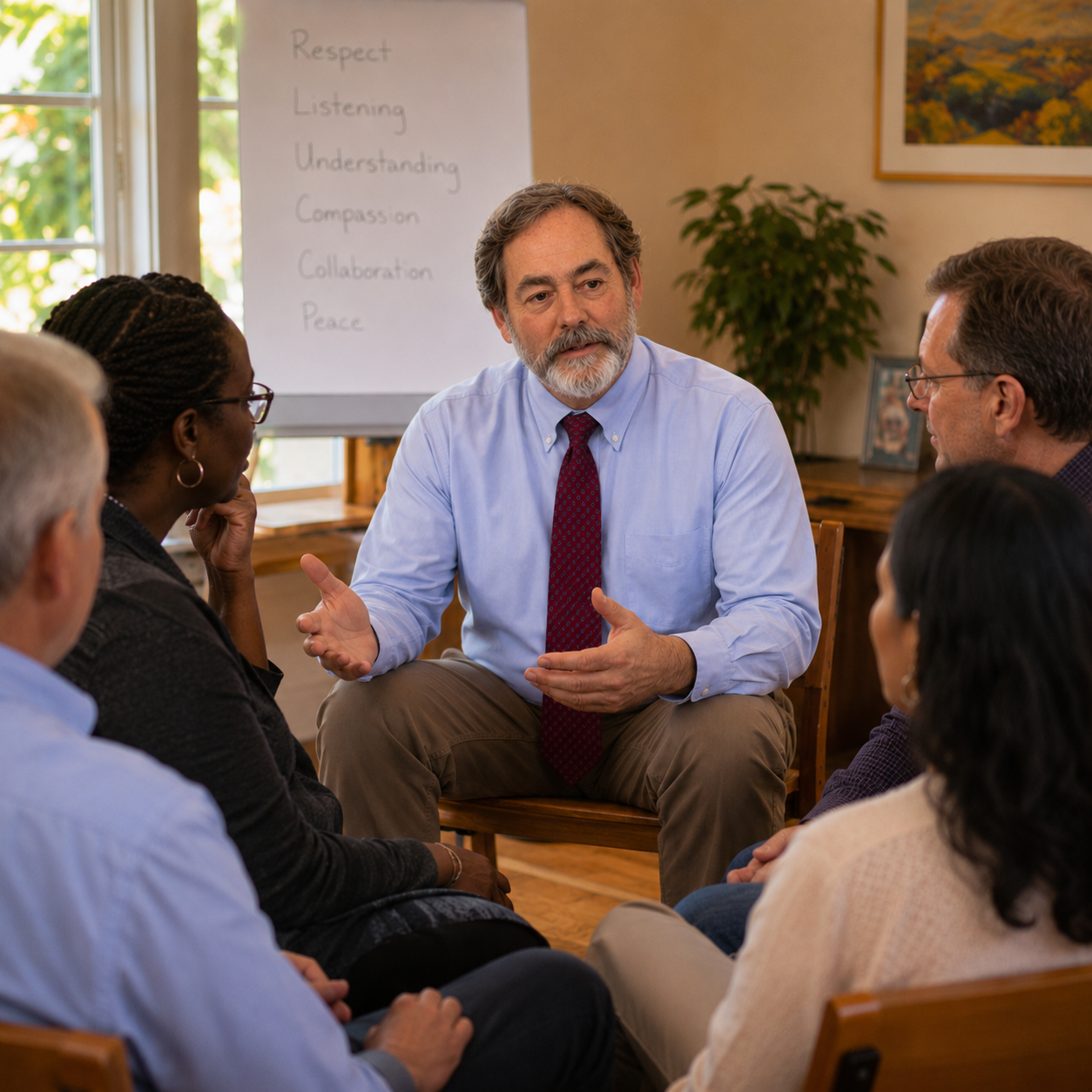
Transformative Conflict Resolution and Peacebuilding
Supporting Communities, Groups, and Individuals – locally, regionally, and internationally – to address disputes, issues, and fundamental needs in ways that are mutually beneficial, empowering, sustainable, holistic, support inner awareness and growth, deepen understanding, and build relationships and community.
Facilitating processes, structures, and solutions that explore deep within fixed positions, open up creative space, and address underlying interests, needs, and root causes, together with immediate symptoms, concerns, and problems.
Working in Hendersonville, Western North Carolina, the US, and beyond, Reverend Gary offers Conflict Resolution and Peacebuilding services, including mediation, facilitated dialogue, and experiential training for individuals, groups, and communities
“You said to me many years ago that the peacebuilder is there to hold different truths together. I’ve shared that a thousand times with others. Thank you so much!” (Amy G)
Understanding Conflict
Conflict is a natural part of being human; what matters is how we move through it
Conflict primarily results from differences in how we perceive situations and reality, and how we seek to satisfy needs, interests, and desires.
Important conflict ingredients include power, feelings and emotions, values and principles, trauma, and self-development
A Compassionate, Holistic, and Partnering Approach to Conflict
in Western North Carolina
My work as a peace facilitator and dialogue facilitator is rooted in:
-
Deep listening
-
Non-judgmental presence
-
Respect for all voices
-
Trauma-aware facilitation
-
Spiritual and emotional care
-
Practical communication tools
I believe that even in moments of deep disagreement, people can find pathways toward understanding when they feel heard and supported.
Support for Difficult Conversations, Transforming Conflict, and Community Healing
As a facilitator for conflict resolution, dialogue, peace, and interpersonal harmony, Rev. Gary works to create space for meaningful conversation, understanding, and healing. His approach centers on deep compassion and listening, partnering, and various practical tools that help people move from polarization toward connection
Whether you are navigating tension within a group, seeking support for difficult conversations, or looking to build stronger connection and communication within your organization or community, Rev. Gary can help guide the process with care and clarity.
Serving the local Hendersonville area and throughout Western North Carolina as a mediator, group facilitator, and dialogue facilitator, as well as facilitation support nationwide, both in-person and virtually.
Who This Work Supports
You may be seeking a dialogue facilitator or conflict resolution facilitator because:
- A community or organization is experiencing tension or division
- A group needs help navigating difficult conversations
- A family or team is facing ongoing conflict
- You want a skilled facilitator for relationship-building dialogue
- A faith community is navigating change or disagreement
- You want to foster healthier, more productive communication
- You are planning a community dialogue event
- Your organization needs professional mediation and facilitation
- You want to bring people together across differences
Conflict can feel overwhelming and isolating. With the right support, it can become an opportunity for understanding, growth, and transformation.
Key Principles and Practices
Rev. Gary’s work as a peace facilitator and dialogue facilitator is rooted in these principles and practices:
- We’re all in this together: Moving from “me versus you” to “us versus the problem”
- Build and strengthen healthy relationships
- Attend to internal conflicts
- Focus on benefitting the other parties, as well as oneself
- Everyone has a story, everyone needs to be heard and supported: offering deep listening and practical communication skills to help people find pathways toward understanding, even when there is strong disagreement
- Offer spiritual and emotions care: give space for strong emotions and unhealed wounds; trauma awareness.
- Speak your truth, but don’t use it as a weapon
- Look for “what is behind” – people don’t always say what they mean
- Culture and upbringing play important role in how people deal with conflict
- Non-judgmental presence and respect for all voices
- Encourage compassion, empathy, and forgiveness
- Pay attention to timing
- Discover shared needs and expanding common ground
- Think out of the box: Moving beyond fixed ideas and creating new options
- Take specific action steps: What is doable and “Yes-able”
- Maximize shared power, not control
- Focus on the future, while learning/healing from the past
- Build trust, while verifying commitments and agreements
- Sometimes conflict management, though clear agreements and boundaries, is more realistic than conflict resolution
Services Offered
Conflict Resolution Facilitation
As a conflict resolution facilitator, Rev. Gary assists individuals and groups to move through conflict with intention, focus, care, and empowered by structures and guidelines that work for all. His role is, essentially, to create a space where all voices can be heard and where meaningful progress can be made.
This may include:
- Facilitated conversations between individuals or groups
- Restorative dialogue sessions
- Guided conflict transformation processes
- Relationship-building
- Communication support
- Ongoing facilitation for organizations
Dialogue Facilitation
As a trained dialogue facilitator, Rev. Gary begins with offering agreements to create safe space, then guide the conversations with compassionate presence, content neutrality, and engaging with emotional dynamics. The sessions may be one-time or ongoing with processes designed to foster understanding and rebuild trust.
Dialogue facilitation can support:
- Community conversations
- Faith communities
- Organizational teams
- Interfaith collaboration
- Reducing social or political polarization
- Group healing processes
His goal is to help people listen deeply, speak honestly, and remain/grow in relationship even when differences exist.
Peace Facilitation
As a peace facilitator, Rev. Gary works with groups seeking to move beyond conflict toward shared understanding and mutual respect. Peacebuilding is not about avoiding disagreement — it is about creating pathways through it toward common ground.
Peace facilitation may include:
- Community peace circles
- Dialogue across differences
- Restorative practices
- Compassionate communication processes
- Healing after conflict
- Ongoing group relationship-building
Mediation Support
In some situations, structured mediation is helpful. As a mediation facilitator, Rev. Gary offers guided sessions that help parties move toward clarity, resolution, and next steps.
Mediation can address:
- Organizational conflict
- Group disagreements
- Family tension
- Community disputes
- Faith community challenges
He provides compassionate mediation support for relational and community-based conflict.
Workshops & Trainings
Rev. Gary also offers experientially-based workshops and trainings for organizations and communities seeking to develop long-term skills and practical processes in communication and conflict transformation.
Topics may include:
- Conflict transformation skills
- Conflict styles and dynamics
- Understanding cultural, societal, and psychological dimensions of conflict
- Linking intra-personal conflict with inter-personal conflict
- Mindfulness
- Compassionate listening
- Facilitating difficult conversations
- Restorative dialogue practices
- Building resilient communities
- Interfaith understanding and connection
- Trauma awareness and healing
These can be offered in Western North Carolina, New England and nationwide.
Serving Western North Carolina & Beyond
Rev. Gary serves as a WNC dialogue facilitator and conflict resolution facilitator for:
- Asheville
- Hendersonville
- Western North Carolina
- New England & Nationwide
- Faith communities
- Nonprofits
- Retreat centers
- Organizations
- Families and groups
Sessions are are available in-person and virtually.
What to Expect
Each situation is unique. We begin with a conversation about your needs and goals. From there, we can design a facilitation or mediation process that supports your group or organization.
Options may include:
- One-time facilitated dialogue in small and large groups
- Multi-session mediated conflict resolution
- Workshops or trainings
- Ongoing facilitation
- Community dialogue events
Bring a Facilitator to Your Community or Organization
If you are seeking a conflict resolution facilitator, dialogue facilitator, peace facilitator, or mediation facilitator, Rev. Gary would be honored to support your community, organization, or group.
Together, we can create space for understanding, healing, and meaningful engagement.
To learn more or discuss your situation,
reach out to begin a conversation about how facilitation can support your needs.
Transformative Societal Peacebuilding
Facilitating societal and communal peace through personal growth,
cultural development in attitudes and values, reconciliation, trustbuilding,
healing old wounds and creating new futures
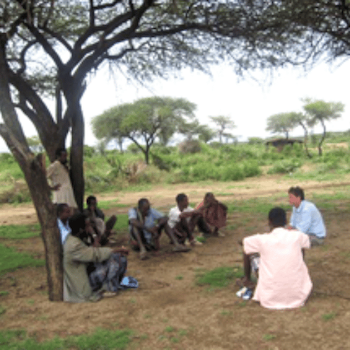
Transformative Societal Peacebuilding
Overview
Peacebuilding can be defined as a long-term process at all levels of society that facilitates the establishment of sustainable peace through activities that address the causes and effects of conflict, and promote security, justice and development in systems and institutions in the economic, political, social, and cultural spheres.
Common peacebuilding activities include: analyzing and addressing underlying tensions and core grievances (e.g. structural) at an early stage before they lead to intractable conflict and violence; recovery after war; developing responsive institutions of governance; increasing citizen capacity and participation through strengthening community-based and non-government organizations; restorative justice; peace education; open media reflecting diverse views; capacity-building in communication and problem-solving; mediation; dialogues; building linkages between key stakeholders at grassroots, middle, and top layers of society; inclusive cultural and sporting events, and community improvement projects benefitting all.
As a peacebuilding specialist since the 1980s, primarily in countries outside the US, Rev. Gary has been involved in many of these activities. But in recent years, and especially since his ministerial ordination in 2011, Rev. Gary’s peacebuilding focus has evolved more toward its personal, relational, and spiritual aspects, emphasizing the integration of personal development, spirituality/faith, communal relationship-building and cultural development into the more classic aspects of peacebuilding. He calls this transformative societal peacebuilding.
This approach seeks to facilitate sustainable peace and development on both personal and communal levels, by supporting fundamental growth and change in attitudes, values, awareness, perceptions, behaviors, along with relationships to self and others. Respectful cultural development. It also includes examining relationships and practices pertaining to faith and spirituality – whether they be religious, spiritual, or secular. Integrating this personal exploration onto the communal level, transformative societal peacebuilding aims to foster reconciliation and to build trust and common ground, heal grievances and wounds of the past, and create new futures which honor people’s hopes and meet their basic needs.
This work addresses and seeks to reduce and overcome the dynamics and effects of social polarization (“us vs. them”), trauma, fear, prejudice and stereotypes, especially between groups divided by race, ethnicity, religion, but also socio-economic and political divides.
Very importantly, Rev. Gary’s transformative societal peacebuilding work is grounded in a worldview which says that, along with a fact-based objective reality or “truth”, there also exists different “truths” – different versions of what is real, meaningful, and valid for different people and groups, depending on lived experience, culture, history, information sources, etc. Regardless of one’s personal views, the essential task of the peacebuilder is NOT to agree with any one version of truth, but rather to hold space, lightly but firmly, for different versions of truth to exist simultaneously, for people to express their truth but also to hear the truth of another, and find the way forward.
And transformative societal peacebuilding is also about transforming the peacebuilder, through a commitment to their own spiritual and emotional growth and then reflecting and integrating that personal work into their peacebuilding work. In this way, personal and societal peacebuilding are mutually reinforcing. (Similar to Andrew Harvey’s “Sacred Activism”)
Services
Rev. Gary’s transformative societal peacebuilding services cover four main areas of work – Context and Design, Capacity-Building, Peacebuilding Intervention, Follow-up and Evaluation – each with specific activities, as follows:
Context And Design
- Needs Assessment: Understanding the needs and resources in a given conflict context involves more than the technical process of data collection, analysis, and dissemination. Rev. Gary’s focus is how to enter the context and engage with people, to develop trust, and understand their mindset, experiences, hopes and fears. It’s not just about asking the right questions, but to be able to reflect on the questions and answers together with people, to find common meaning and response.
- Conflict Analysis: To address conflict, we have to understand its often multifaceted reality, including its context, causes, issues, perspectives, dynamics, and, most important, the parties involved and their relationships. Conflict analysis is done through a series of tools, such as the context profile, conflict tree, and mapping of the conflict arena and its actors. Again, Rev. Gary pays particular attention to the relationship and connection with those who are providing the information which is critical to its accuracy and well as to any intervention response.
- Conflict Sensitivity: Community development projects (such as infrastructure, job creation, health care, education) do not operate in a vacuum, but rather in an existing context (history, politics, conflict, culture, relationships, etc.), and a project itself can affect that context. Regardless of how well-intentioned or needed a particular project might be, if it does not take into account the context nor its impact on the context nor address that impact, it can do more harm than good.
 Conflict sensitivity is about 1) Understanding the context in which the project or intervention operates, 2) Understanding the interaction and impact between the intervention and the context, and 3) Acting upon the understanding of this interaction to mitigate negative impacts and maximize positive impacts. Being conflict sensitive means being able to integrate (“mainstream”) peacebuilding or conflict prevention activities into the development intervention. And to do this with the policies and support functions of the development organization (procurement, finance, HR, knowledge management, etc.), to prevent or address negative impacts.
“Do No Harm” is a specific conflict sensitivity model which focuses on understanding and addressing dividers and connectors. These are systems and institutions, attitudes and actions, values and interests, experiences, symbols, events that either separate or bring together people in a given context. Rev. Gary designs and leads conflict sensitivity assessments of both projects and organizations, as well as capacity-building workshops (including in the “Do No Harm” model) and ongoing support work to increase conflict sensitivity in development work and peacebuilding in the communities served.
Project Design and Proposal Development: Rev. Gary works on all aspects of project design and proposal development, and strives to incorporate a transformative peacebuilding perspective. These include formulation of project objectives, criteria, assumptions, risks, strategic alignments, sustainability, participation of beneficiaries, gender considerations, budgeting, staffing, work plans and timelines.
Capacity-Building
 Design and Facilitation of Training: The peacebuilding trainings that Rev. Gary offers generally range from 3 days to 10 days and features both personal development and practical skills training, including the following:
- Essential personal qualities (e.g. empathy and emotional self-awareness)
- Conflict analysis
- Conflict styles
- Communication – speaking and listening skills
- Negotiation and Mediation
- Trauma awareness and healing
- Trust-building; Reconciliation; Forgiveness
- Dialogue Facilitation
- Early warning / reducing tension / zones of peace
- Peace rituals and visioning
- Entry Points
- Creating Culture of Peace
- Peacebuilder self-care
The training methodology is participatory, elicitive, and contextualized, with role play simulations of an actual conflict environment. There are presentations and discussions in the large group, along with small group work/presentations, and the development of action plans to be implemented after the training.
The peacebuilding training can be beneficial for most individuals and groups, including community-based and non-governmental organizations, development personnel, government officials and workers, and for the business community.
Click here for Outline of Somali Interclan Peacebuilding Training
Peacebuilding Intervention
- Reflective Conversation (Design and Facilitation)- an intra-group discussion (such as within an organization) that focuses on listening to one another to understand the perspectives, needs, and experiences of the others in the group, to build connections and heal wounds, rather than mediation, agreement, or resolution of specific issues, though it can be a step toward that.
- Relationship-building dialogue (Design and Facilitation) a series of reflective conversations beginning on an intra-group level, and eventually between groups where there is mistrust and potential or actual conflict.
One area of strong interest for Rev. Gary is inter-spirituality dialogue and practice, which involves bringing together people of different faith beliefs and traditions, both lay people and clergy, to deepen understanding and connection between them.
These dialogues focus on telling our story and listening to the story of others, because this is the essential ground for relationship building. In addition, specific forms of engagement and interaction, including rituals and ceremonies, will take place to reinforce shifts in perception, attitude and goals.
Click here for Outline of Somali Interclan Relationship-Building Dialogue
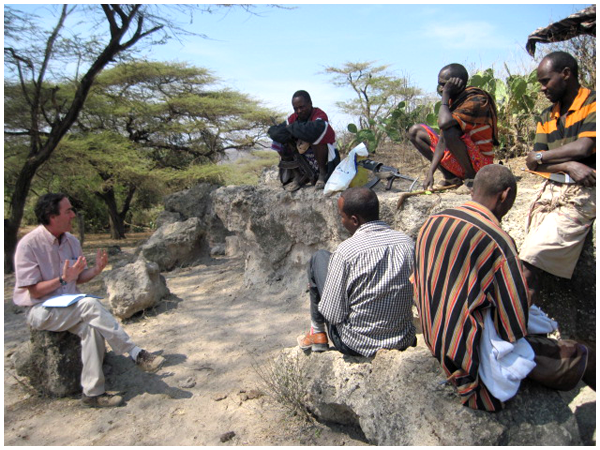
- Third-Party Facilitation of Conflict: The exact form of third-party facilitation will depend on what the parties in conflict are asking for, as well as an assessment of the conflict context, the relationships, and what is most culturally appropriate and doable. Mediation may be appropriate but it is practiced in different ways in different cultures, particularly in terms of the authority of the mediator and his/her relationship with the conflicting parties. Many contexts or cultures have a history of indigenous conflict resolution and peacebuilding approaches that can be very effective. Rev. Gary starts by learning what traditional tools and practices are already present in a given context, and then will seek to strengthen them, if necessary, by integrating modern universal approaches. If he is in a context or culture other than his own, he will generally take a more indirect support role to the indigenous peacebuilders. If in his own context or culture, he will take more of a direct, leadership role. But in either case, his role will be to elicit the ideas and ways forward from the participants, rather than be prescriptive.
Follow-Up And Evaluation
Training Follow-up Field Support: Rev. Gary provides follow-up field support to trainees to help reinforce and apply learning for both peacebuilding and conflict sensitivity. This can include assistance in implementing action plans, troubleshooting, counseling and mentoring, team cohesiveness, and additional training, as needed
Monitoring and Evaluation: Via reviewing reports, observation, informant interviews and focus group discussions related to indicators, Rev. Gary does M & E field work and reports for both the context and project intervention, with emphasis on personal development and relationship changes.
Schedule A Presentation or Panel
Rev. Gary is available to give presentations or be part of a panel at public events, conferences, and seminars about any of the above peace building activities and themes.